
Cardiorespiratory Conditioning
8Your heart and lungs are the foundation of your physical capability. Whether you are an athlete looking to shatter performance plateaus or an individual focusing on long-term health and vitality, a generic workout routine will not maximize your potential.
As a Certified Personal Trainer (CPT), I design targeted, data-driven cardiorespiratory conditioning programs that optimize both your aerobic and anaerobic energy systems. By treating cardiovascular training as a precise science, I help you build exceptional physical stamina, lower your resting heart rate, and protect your long-term arterial health.
What I Deliver: The Core Service Architecture
My conditioning programs are built around the two primary metabolic pathways your body uses to generate energy. To build a truly resilient cardiovascular system, we must train both.
Precision Aerobic Programming (Endurance & Recovery)
Aerobic training utilizes a continuous supply of oxygen to fuel long-duration, steady-state physical activity.
- The Methodology: I establish your precise target heart rate zones using your baseline metrics. We then utilize modalities like cycling, rowing, power walking, or swimming to keep your body working efficiently in your optimal fat-burning and aerobic endurance zones.
- The Return on Investment: This structural conditioning enlarges your heart’s stroke volume, allowing it to pump more blood with less effort. It reduces your resting heart rate, manages blood pressure, and dramatically speeds up your recovery times between intense bouts of physical exertion.
Strategic Anaerobic Intervals (Power & Metabolic Efficiency)
Anaerobic training involves brief, high-intensity bursts of speed and power where your muscles exert maximum effort without relying immediately on oxygen.
- The Methodology: I integrate structured interval training, short hill repetitions, or rapid-stepping drills into your routine. These bursts are precisely timed and paired with calculated rest periods to push your limits safely.
- The Return on Investment: This training elevates your VO2 max (the maximum amount of oxygen your body can utilize during exercise). It stimulates your metabolism, triggers post-exercise calorie burn, and builds the raw physical power needed to handle sudden, high-demand physical challenges.
Specialization: Advanced Longevity & Senior Heart Health
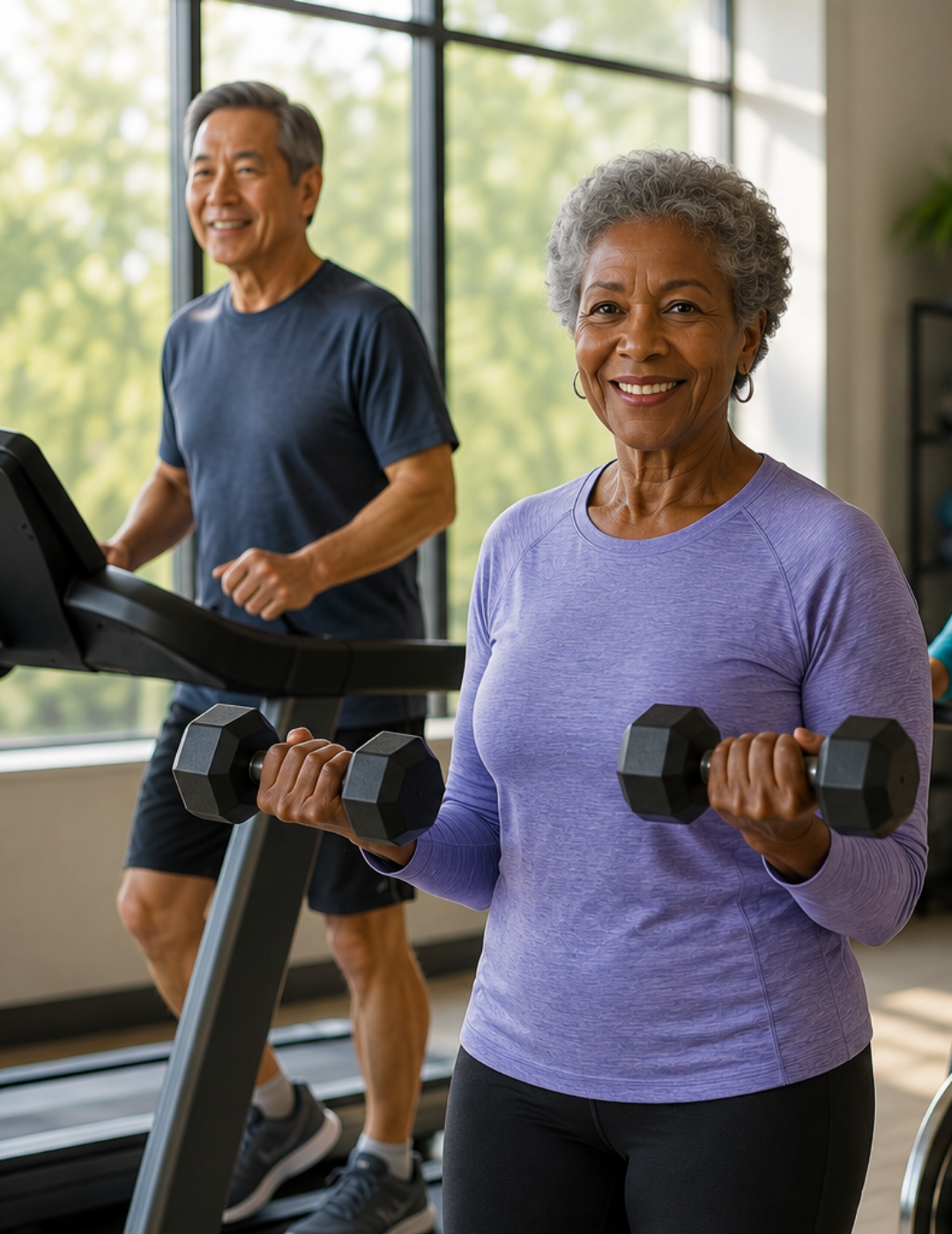
While cardiovascular endurance is vital for all age groups, targeted cardiorespiratory conditioning becomes non-negotiable as we cross into our older adult years. The natural aging process causes arteries to stiffen and lung capacity to gradually decline. My specialized senior programming is specifically engineered to reverse these age-related changes.
Joint-Friendly Aerobic Selection
Seniors do not need to perform high-impact running to achieve profound heart and lung benefits. I select and program low-impact, joint-friendly aerobic modalities tailored to your body:
- Recumbent & Studio Cycling: Delivers a powerful cardiovascular workout while supporting the lower back and removing impact from the knees and ankles.
- Brisk Power Walking Protocols: Strategically elevates the heart rate while building essential bone density in the hips and lower spine.
- Buoyancy-Assisted Resistance: Utilizing water or light resistance bands to challenge the heart muscle uniformly without compressing sensitive joints.
Safe Anaerobic Power for Active Independence
Anaerobic training for seniors is not about extreme, exhausting sprinting. Instead, it means safe, controlled, 15-to-30-second intervals of higher effort—such as rapid stepping or walking up a brief incline.
This specific training forces your fast-twitch muscle fibers to fire. In daily life, this is the exact system that saves you from a fall if you trip, gives you the immediate power to lift a heavy object, and provides the stamina needed to climb stairs effortlessly.
Cognitive & Lifestyle Longevity
Cardiorespiratory conditioning is directly linked to brain health. By increasing your heart’s efficiency, we maximize blood circulation, oxygen, and nutrient delivery straight to your brain. My clients consistently report sharper focus, improved memory retention, and a massive surge in daily energy levels.
How I Onboard You to This Service
I never guess when it comes to your heart. Every conditioning program begins with a non-invasive cardiovascular check during your initial fitness assessment to determine your safe operating zones. From there, I closely monitor your breathing patterns, heart rate recovery, and perceived exertion during every session. You will always be safely challenged, never over-exhausted, and fully empowered to reclaim your peak physical vital statistics.
Course Description
This 5-hour practical course provides active older adults with a step-by-step guide to improving heart health, endurance, and everyday stamina. Through ten easy-to-follow, 30-minute lessons, you’ll learn how to exercise safely, increase energy, improve cardiovascular fitness, and maintain an active, independent lifestyle. The course explains cardiorespiratory conditioning in simple terms and teaches practical techniques for monitoring exercise intensity, choosing joint-friendly activities, and building lifelong healthy habits.
Course Outline
Section 1: Your Heart and Lungs as an Engine
- Learn how the heart and lungs work together.
- Understand how aging affects your cardiovascular system.
- Discover how regular exercise improves stamina and supports independent living.
Section 2: Steady Pacing vs. Short Bursts
- Learn the difference between steady exercise and interval training.
- Discover why both are important for heart health.
- Find a comfortable starting pace based on your fitness level.
Section 3: Understanding Your Movement Assessment
- Review the results of your movement or walking assessment.
- Identify strengths and areas that need improvement.
- Learn how to exercise safely within your current abilities.
Section 4: Finding Your Personal Safe Training Zones
- Learn how to exercise at the right intensity.
- Monitor your effort using breathing and pulse checks.
- Understand safe warm-up, workout, and cool-down zones.
Section 5: Joint-Friendly Cardio
- Explore low-impact cardio options such as walking, cycling, and water exercise.
- Protect your knees, hips, and back while improving endurance.
- Build a weekly routine that fits your lifestyle.
Section 6: Safe Interval Training
- Learn how gentle intervals improve heart and lung fitness.
- Practice simple changes in pace during walks or other activities.
- Use recovery periods to stay energized and avoid overexertion.
Section 7: Heart Health and Brain Health
- Discover the connection between cardiovascular fitness and brain function.
- Learn how exercise supports memory and mental clarity.
- Improve focus, energy, and overall well-being.
Section 8: Building Strength to Prevent Falls
- Strengthen the muscles needed for balance and stability.
- Practice safe exercises that improve quick reactions.
- Build confidence for walking, climbing stairs, and everyday movement.
Section 9: Listening to Your Body
- Learn to recognize when to increase or reduce exercise intensity.
- Modify workouts for low-energy or stiff days.
- Stay active while reducing the risk of injury.
Section 10: Creating Lifelong Healthy Habits
- Develop a long-term cardiovascular fitness plan.
- Combine exercise with healthy habits such as hydration and quality sleep.
- Stay motivated and continue building strength, stamina, and confidence.
- Specialization: Advanced Longevity & Senior Heart Health
- Course Description
- Course Outline
- Section 1: Your Heart and Lungs as an Engine
- Section 2: Steady Pacing vs. Short Bursts
- Section 3: Understanding Your Movement Assessment
- Section 4: Finding Your Personal Safe Training Zones
- Section 5: Joint-Friendly Cardio
- Section 6: Safe Interval Training
- Section 7: Heart Health and Brain Health
- Section 8: Building Strength to Prevent Falls
- Section 9: Listening to Your Body
- Section 10: Creating Lifelong Healthy Habits